

 LOCATIONS
Your Guide to a Beautiful Lawn and Landscape from Early Cleanup through Planting Season
Updated for the 2026 spring season.
In This Article
- Welcome to Spring in Southwest Ohio
- Getting Started: Early Spring Tasks
- Plant Selection for Southwest Ohio
- Garden Bed Preparation
- Hardscape Projects
- Irrigation and Water Management
- Spring Lawn Renovation
- Working with Southwest Ohio’s Clay Soils
- Local Pest and Disease Management
- Enhance Your Outdoor Living Experience
- When to Call the Pros
- Partner with Champion for Spring Success
- Conclusion
- Frequently Asked Questions
Spring Landscaping in Southwest Ohio Starts Here
Spring landscaping in Southwest Ohio requires careful timing, the right plants, and a plan that works with the region’s clay soils and unpredictable weather. At Champion Mulch & Landscape Supply, we’ve been supplying materials to professional landscapers and homeowners across Southwest Ohio for over 12 years. We know what our soils need, when the timing matters, and where people tend to run into trouble.
This guide covers the full spring season, from early cleanup tasks in late February through planting and final prep in May. Whether you’re a homeowner refreshing your beds or a landscape professional coordinating multiple jobs, the same principles apply: good materials, right timing, and a clear plan.
Avoid These Common Spring Mistakes
- Planting Too Early — Wait until after your local last frost date, which in Dayton typically falls between April 11 and April 20, and in the Cincinnati area around April 19–21
- Skipping Cleanup First — Leftover debris smothers grass and creates conditions for disease
- Waiting on Weeds — Early pre-emergent application prevents a season of problems
- Improper Mulching — Too much piled against stems and trunks causes rot, too little loses all the benefit
- Ignoring Drainage — Spring rains expose problems that can get worse all season if left unaddressed
“A little planning and timely care can go a long way in keeping your outdoor space healthy and looking sharp through the season.”
— Ryan Dunham, Champion Mulch & Landscape Supply
Getting Started: Early Spring Tasks
The first pass through your yard doesn’t need to be complicated. Once daytime temperatures consistently hold above freezing, usually late February into early March in our area, you can start laying the groundwork.
For a month-by-month breakdown you can work through at your own pace, download our Spring Yard Cleanup Checklist. It covers late February through May with task categories, done-by dates, and space for notes.
Want more detail on the cleanup side? Our Spring Yard Cleanup Guide will walk through the full process.
Lawn Care Essentials
When soil temperatures reach about 50–55°F consistently, your lawn starts its active growth cycle. That’s your cue.
“A healthy lawn provides a strong foundation for the entire outdoor space. Begin by cleaning up — rake up leaves, branches, and debris that may have accumulated over the winter. Once the ground is thawed, fertilize and reseed areas that need a little extra attention.”
— Jesse Weidner, Weidner Landscape Solutions
Here’s what to work through in early spring:
- Remove fallen branches, leftover leaves, and debris that can smother grass or create disease conditions
- Use a plug aerator to loosen our region’s often compacted clay soil
- Test your soil through OSU Extension before fertilizing — Southwest Ohio clay soils often have different needs than what a national fertilizer bag assumes
- Apply a pre-emergent herbicide to stop crabgrass before it germinates, targeting that 50–55°F soil temperature window
- Begin your spring fertilizer program once the lawn is actively growing
- Fill in winter-damaged bare patches with quality grass seed after aerating
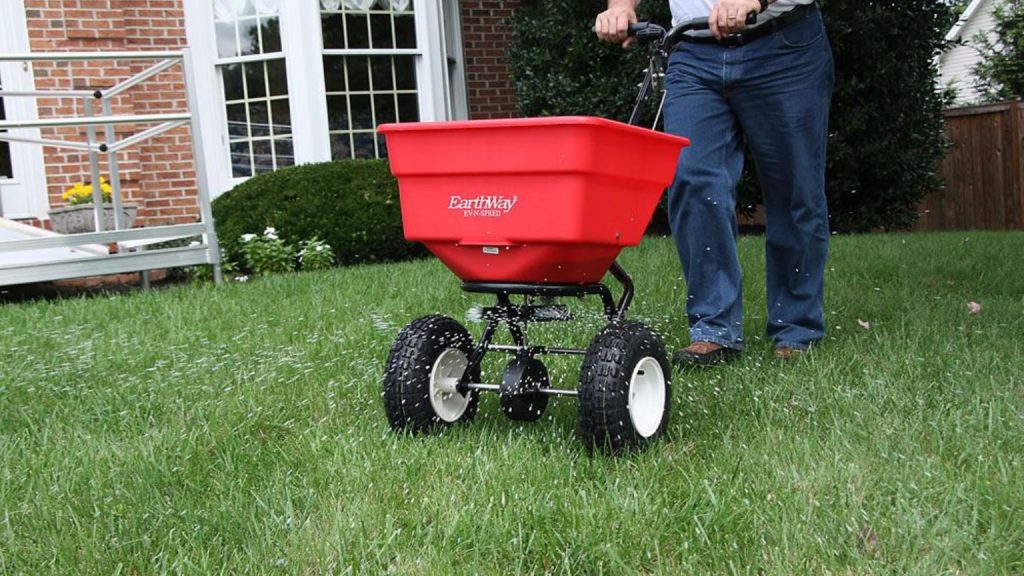
For fertilization, Champion now carries Shaw’s professional turf products from Knox Fertilizer, a manufacturer with over 70 years supplying the professional turf industry. Shaw’s uses SurfCote polymer coating technology, which releases nitrogen more uniformly over time for steadier green-up without the flush growth.
Shaw’s 4-Step Program for Southwest Ohio cool-season lawns:
- Step 1 — Early Spring: Shaw’s 10-0-3 with Dimension (Dithiopyr 0.13%) — pre-emergent and fertilizer in one application, 100% SurfCote for up to 4 months of nitrogen release. Apply when the soil hits 50–55°F.
- Step 2 — Mid-Spring, approx. 6 weeks after Step 1: Shaw’s 15-0-5 with 15.8% VIP — broadleaf weed control post-emergent combined with fertilizer. Apply to actively growing weeds.
- Step 3 — Summer: Shaw’s 24-0-5 with Iron — fertilizer plus 2% iron for color, 30% SurfCote.
- Step 4 — Late Summer/Fall: Shaw’s 30-0-6 50% SurfCote — straight fertilizer with added potassium for drought tolerance going into fall.
For best results, apply fertilizer when the ground is moist but the grass is dry, preferably in the morning. Keep mowing height at 3 inches through spring, gradually moving to 3.5–4 inches in summer to encourage deeper roots. For a deeper dive on fertilizer timing and application, see our Spring Fertilizer Guide.
Mulch Application
Fresh mulch does more than improve appearance. It holds soil moisture during dry stretches, moderates soil temperature, slows weed germination, and adds nutrients as it breaks down over the season.
“Applying a pre-emergent weed preventer as soon as temperatures begin to rise helps slow weeds before they germinate. Refreshing mulch early in the season helps regulate soil moisture, suppress weed growth, and keep your landscape looking clean. It’s a simple step that pays off all the way through summer.”
— Ryan Dunham, Champion Mulch & Landscape Supply
For Southwest Ohio gardens, a few of our most popular bulk mulch varieties:
- Ultra Black or Ultra Brown — strong color contrast against plants and shrubs, holds up well through the season
- Cedar Mulch — natural insect resistance and a pleasant aroma
- Brown (Black) Gold — natural appearance with good moisture retention
Additional premium options include Black Platinum, Brown Platinum, Champion Special, Gardener’s Choice, Ultra Red, and Kid’s Carpet. Our full mulch inventory is available for both pickup and bulk delivery, with fast turnaround to keep your projects on schedule.
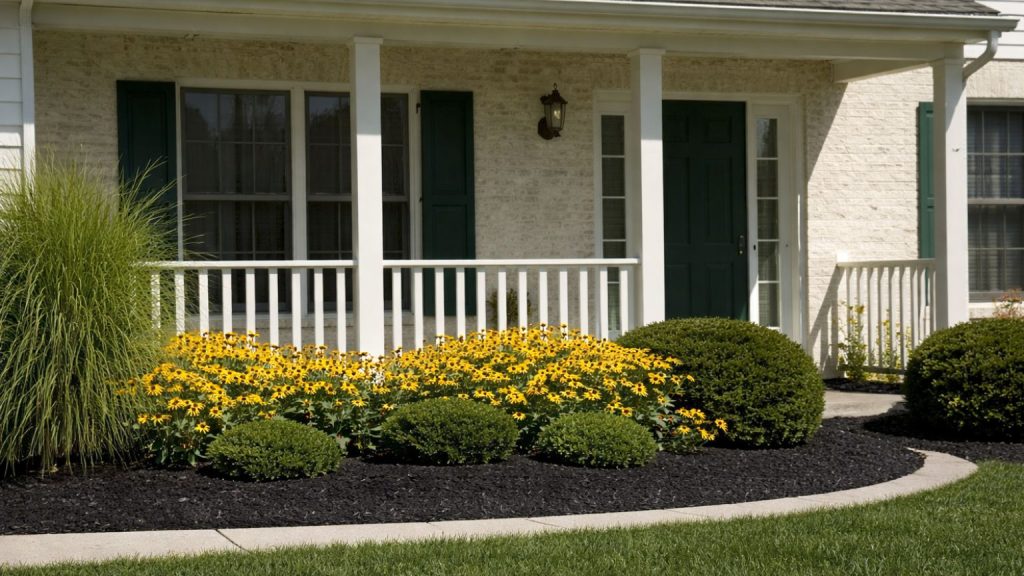
Apply 2–3 inches of fresh mulch early in the season. Leave a small gap around the base of tree trunks and plant stems. Mulch piled directly against wood holds moisture and encourages rot. For most of Southwest Ohio, late April is a good target once the soil has begun to warm.
Plant Selection for Southwest Ohio
Most of Southwest Ohio sits in USDA Hardiness Zones 6a to 6b, which supports a wide variety of plants. But Zone 6 doesn’t mean frost-free in March. A late cold snap well into April is common here, and jumping the season costs time and money.
“Some homeowners rush to plant tender annuals or vegetables too soon, not realizing that frost can still hit in Dayton well into April. Check your local frost dates and wait until the danger has passed. Planting too early risks losing plants to one bad night.”
Understanding Frost Dates in Our Region
Average last frost dates for reference:
- Dayton: April 11–20
- Kettering, Centerville, Beavercreek: April 21–30
- Cincinnati: approximately April 19–21
Always cross-check a 10-day forecast before putting anything frost-tender in the ground.
For a full planting calendar with timing by crop and flower type, see our Spring Planting Guide. Here are the varieties that perform well in our climate:
Trees and Shrubs
- Dogwood
- Redbud
- Serviceberry
- Viburnum
- Hydrangea
Perennials
- Coneflower
- Black-eyed Susan
- Daylily
- Salvia
- Coral Bells
Spring Ephemerals (Native to Our Region)
- Virginia Bluebells
- Trillium
- Bloodroot
- Spring Beauty
Plant on a cloudy day or in the evening when possible to reduce transplant shock. Water thoroughly after planting and apply a layer of mulch to hold moisture and moderate soil temperature. On pruning — hold off on spring-blooming shrubs like forsythia, lilac, and azalea until after they finish flowering. Summer-blooming shrubs that flower on new wood, like butterfly bush, can be cut back in early spring.
Garden Bed Preparation
Soil quality shapes everything that grows in it. Southwest Ohio clay soils are workable, but they benefit from organic material every season. Champion carries several options to amend and improve bed performance:
- Processed Topsoil — screened for consistency, good for new beds and raised areas
- Organic Processed Topsoil — blended with organic material for better plant growth and drainage
- Champion Leaf Compost — adds nutrients and improves soil structure over time
When preparing beds:
- Remove weeds completely, including roots
- Add 2–3 inches of quality topsoil or compost across the bed
- Till or work it into the top 6–8 inches for new beds
- Level and rake smooth before planting
Champion Leaf Compost is a practical choice for beds that have been planted for several seasons and need organic material worked back into the soil.
Hardscape Projects
Spring is the right time to inspect and address hardscape. Freeze-thaw cycles through winter shift pavers, open gaps in retaining walls, and crack mortar joints. Catching these early keeps repairs manageable.
Projects worth tackling before summer:
- Patios and walkways
- Retaining walls — check for shifting or gaps
- Re-leveling sunken or tilted pavers
- Fire pits
- Water features
Champion carries pavers from Unilock, Hessit Works, Oberfields, and Belgard, along with hardscape accessories from Alliance Designer Products, including Gator Base, Gator Cleaners and Sealers, and Gator Binding Agents. Stop into any of our locations and work directly with our team to plan your project with confidence.
Irrigation and Water Management
Overwatering in spring is one of the more common mistakes homeowners make, and it’s easy to understand why. Plants can look stressed after winter and the instinct is to water. But many plants are still partly dormant in early spring and don’t need extra water yet.
“Be mindful of rainfall and check soil moisture before watering. Too much water in cooler, wet spring conditions leads to root rot and fungal issues. If the soil is still damp 2 inches down, skip the watering.”
— Jesse Weidner, Weidner Landscape Solutions
Practical guidelines for spring irrigation:
- Water deeply but infrequently — once or twice per week — to promote deep root development
- Target 1–1.5 inches of water per week for established lawns, combined with natural rainfall
- Water in the early morning to reduce evaporation and discourage fungal disease
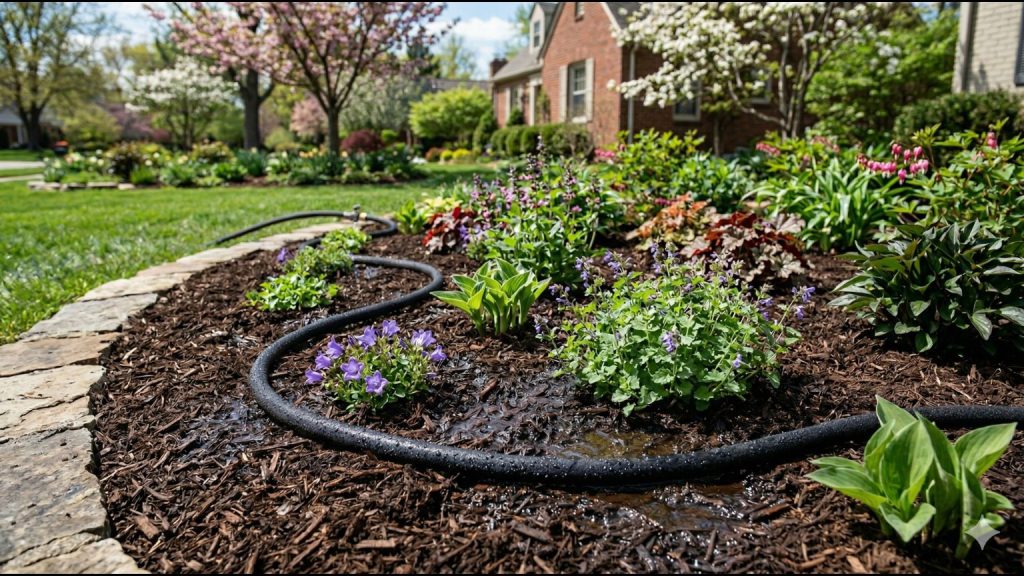
- For beds, soaker hoses or drip irrigation put water where roots are without soaking foliage
If you have an in-ground irrigation system, bring it back online zone by zone in April, check heads for winter damage or misalignment, and set conservative runtimes for spring before adjusting later in the season.
Spring Lawn Renovation
If your lawn came through winter with damage or thin spots, spring is the time to address it before those areas turn into larger problems later.
- Rake affected areas to remove dead grass and matted debris
- Apply a thin layer of topsoil over bare spots
- Spread quality grass seed appropriate for your sun and shade conditions
- Lightly rake to ensure good seed-to-soil contact
- Apply a thin layer of straw or Penn mulch to hold moisture and protect the seed
- Water lightly and frequently until the seed establishes
In Southwest Ohio, a cool-season mix of Kentucky bluegrass, perennial ryegrass, and fine fescues works well in most situations.
Shadier areas do better with a mix that leans toward fine fescues. High-traffic areas benefit from more bluegrass and perennial ryegrass for durability.
Working with Southwest Ohio’s Clay Soils
Clay soils are common throughout Dayton and Cincinnati. They hold nutrients reasonably well but compact easily, drain slowly, and can stay cold later into spring than sandier soils.
Consistent improvement over several seasons makes the most difference:
- Add organic matter like Champion Leaf Compost regularly — the clay structure improves gradually with annual additions
- Core aerate in spring to reduce compaction, particularly in high-traffic areas
- Grade problem spots to prevent water pooling near beds, foundations, or walkways
- Consider raised beds in areas with persistent drainage issues
“Failing to check for proper drainage in garden beds, patios, and lawn areas leads to standing water and potential damage. Make sure key areas drain away from structures. If water pools persistently, install gutters or drainage solutions to direct it away.”
— Jesse Weidner, Weidner Landscape Solutions
After a heavy spring rain, walk your property and note where water sits. Those spots need attention before planting season begins in earnest.
Local Pest and Disease Management
Getting ahead of pests in spring is easier than dealing with them mid-season. Most local experts recommend preventative steps early rather than reactive treatment later.
Watch for these common Southwest Ohio issues:
- Japanese beetles — typically emerge in June, but preventive grub control can be applied in spring
- Bagworms on evergreens — look for egg cases now and treat before populations build
- Mosquitoes and ticks — especially in damp, low-lying areas; eliminate standing water early
- Powdery mildew — more likely during humid stretches
- Fire blight on apples and pears — watch for wilted shoot tips in late spring
Regular inspection of plants through the season catches problems when they’re small. Ask our team at any location about effective solutions for our region.
Enhance Your Outdoor Living Experience
Spring is also a good time to think about outdoor living features that extend how you use your yard into the evenings and into fall.
“Install outdoor lighting to create an inviting atmosphere for evening gatherings. Solar-powered options are easy to install and don’t require running lines. Longer daylight hours mean more time outside, but good lighting keeps things going after dark.”
— Jesse Weidner, Weidner Landscape Solutions
A few additions worth considering:
- Outdoor Lighting — low-voltage path lights, uplighting on trees, string lights over patios
- Fire Pits — one of the highest-use additions in this climate, extending outdoor time well into October
- Paver Patios — spring is the right season to plan and install before summer heat sets in
- Water Features — add sound and visual interest, and they tend to work well in Dayton’s moderate summer climate
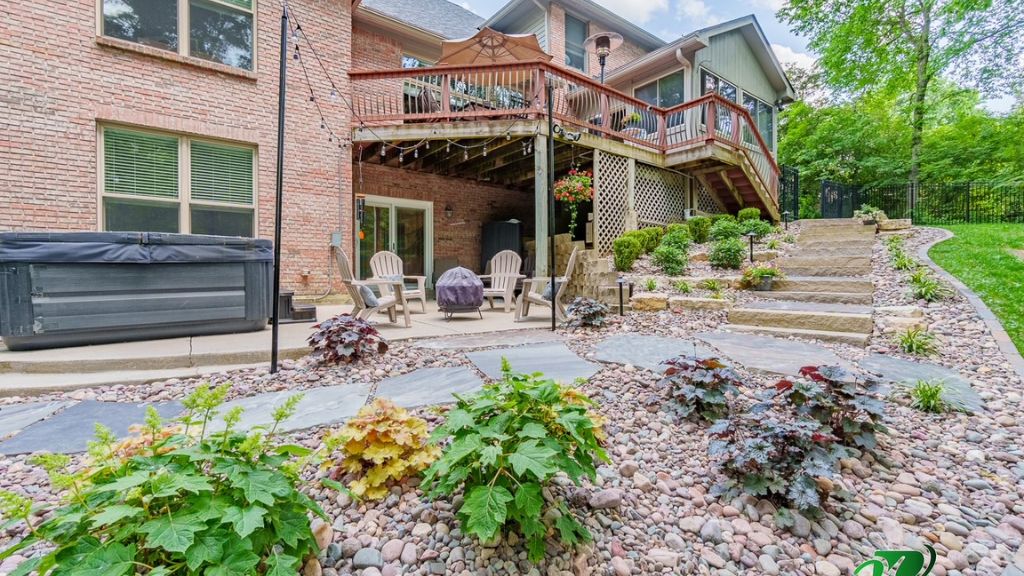
A beautiful job done by Jesse Weidner and his team at Weidner Landscape Solutions.
When to Call the Pros
Many spring tasks are well within reach for a capable homeowner. Others benefit from professional help — not because the work is impossible, but because getting it wrong is expensive and professional tools produce better results.
“While many homeowners cut back plants and bushes before winter, we recommend waiting until spring. Pruning in spring allows plants to remain stronger and more resilient through the cold months. When the weather breaks, removing dead or damaged branches promotes healthy growth, proper size control, and a cleaner shape.”
— Ryan Dunham, Champion Mulch & Landscape Supply
Projects that hold up better with professional execution:
Complex Landscape Design — Cohesive outdoor space design that balances aesthetics and function across different areas of a property is harder than it looks from a distance.
Drainage Solutions — Our region’s clay soils create drainage problems that need proper engineering. French drains, dry creek beds, and regrading are worth doing correctly the first time.
Tree Care — Certified arborists handle large pruning and removal safely, and can diagnose disease issues that aren’t obvious to the untrained eye.
Irrigation System Installation — Professional installation ensures proper zone coverage, water efficiency, and accurate head placement for your specific layout.
Comprehensive Lawn Renovation — Lawns with significant damage or persistent issues benefit from a professional assessment and a combined approach of aeration, overseeding, fertilization, and weed control.
Hardscape Installation — Proper base preparation, drainage planning, and leveling are the difference between pavers that last decades and ones that start shifting after the first winter.
Champion works closely with landscape professionals throughout the Dayton and Cincinnati area. Ask our team for recommendations if you’re looking for a contractor for your project.
Partner with Champion for Spring Success
Champion Mulch & Landscape Supply delivers to commercial landscapers and homeowners throughout the Dayton and Cincinnati regions. Our four locations in Dayton, Moraine, Englewood, and West Chester carry everything you need for the full spring season.
This spring, your purchase supports something close to home. When you put out a Champion yard sign, you save $3 per cubic yard of mulch on your order. Post a photo of your sign on social media, tag Champion, and a $1 donation goes to RMHC Dayton from our monthly sponsor. You’ll also earn one entry into our July 4th Giveaway for a chance to win a $300 Champion Gift Card.
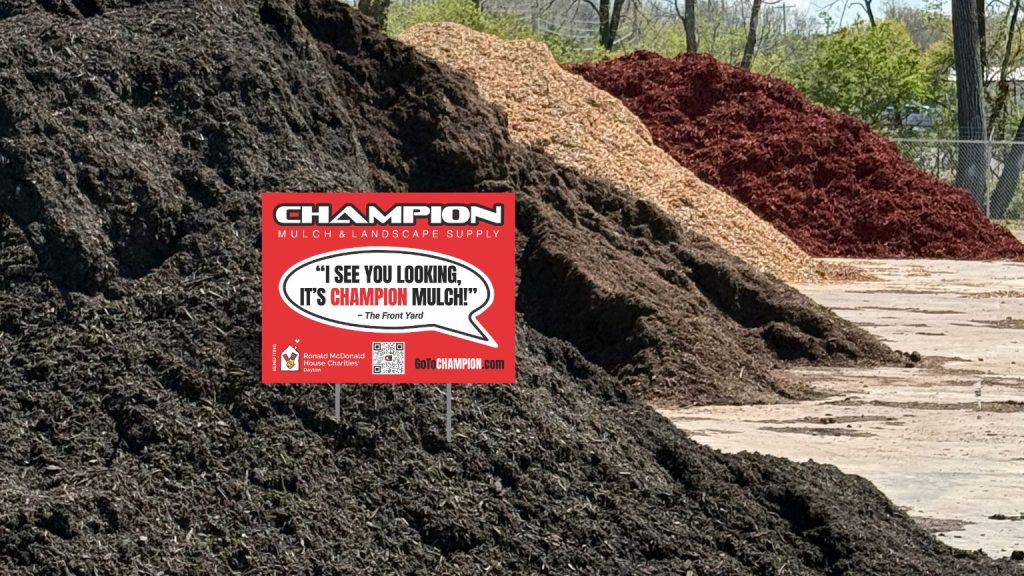
The 2026 Champion Mulch and RMHC Dayton yard sign.
How to participate:
- Purchase mulch from any Champion location or online at www.gotochampion.com
- Display a Champion yard sign in your front yard to receive the $3 per cubic yard discount
- Snap a photo of your sign and post it on Facebook, Instagram, or TikTok — tag us so it counts
- Or email your photo to social@gotochampion.com and we’ll post it on your behalf and still count your entry and donation
Tag us on social:
- Facebook: @ChampionMulchandLandscapeSupply
- Instagram: @ChampionMulchOH
- TikTok: @ChampionMulchOH
Donate directly: rmhcdayton.org/donate — be sure to mention Champion in the comment box.
Support RMHC Dayton Through Your Purchase
- Display a yard sign: Save $3 per cubic yard on mulch
- Post your sign on social: $1 donated to RMHC Dayton + one July 4th Giveaway entry
- Want to donate directly? Visit rmhcdayton.org/donate or use the QR code at any location
Our full product lineup for spring:
- Premium Mulch: Ultra Black, Ultra Brown, Ultra Red, Black Platinum, Brown Platinum, Brown Gold, and more — browse mulch
- Quality Soil: Processed Topsoil, Organic Processed Topsoil, Champion Leaf Compost
- Gravel & Stone: Limestone, River Rock, Decorative Stone — browse stone
- Lawn Care: Shaw’s professional fertilizer programs, grass seed, Earthway spreaders — browse fertilizer
- Professional Hand Tools: A.M. Leonard hand tools
- Hardscape Materials: Pavers from Unilock, Hessit Works, Oberfields, and Belgard
Call or visit any location to talk through your project needs. Bulk delivery is available throughout the Dayton and Cincinnati areas.
Conclusion
Spring landscaping in Southwest Ohio does not have to be overwhelming. With the right timing, the right materials, and a clear plan, you can get ahead of the season and keep your yard and landscape looking sharp all year long.
Quality products make a measurable difference. Our team is stocked and ready at all four locations — Dayton, Moraine, Englewood, and West Chester. Come in, call ahead, or place your order online at gotochampion.com.
Frequently Asked Questions
When is the best time to apply mulch in Southwest Ohio?
Mid to late spring is the right window for most of our area, typically after the soil has begun to warm but before summer heat sets in. Late April works for most of Southwest Ohio. Apply 2–3 inches thick, leaving a gap around trunks and stems to prevent rot.
How much mulch do I need for my landscape?
For a 2–3 inch application, you’ll need roughly 1 cubic yard of mulch to cover 100–150 square feet. Our team can help calculate the right amount for your beds, so you’re not short or sitting on extra. We carry bagged mulch for smaller projects and offer bulk delivery for larger areas.
What’s the difference between your mulch varieties?
Each variety has different color characteristics and some functional differences. Ultra Black and Brown hold color well and work across most planting situations. Cedar Mulch provides natural insect resistance. Brown Gold has a natural appearance with solid moisture retention. Black Platinum and Brown Platinum are premium-colored options for more formal settings. Stop into any location to see samples side by side before you order.
How do I address drainage issues in my yard?
Minor drainage problems often respond to working in organic matter like Champion Leaf Compost to improve soil structure over time. Persistent standing water typically needs a more direct solution — a dry creek bed to redirect flow, French drains in severe cases, or regrading to eliminate low spots. For significant drainage issues, a professional assessment is worth the investment.
What’s the best grass seed for Southwest Ohio lawns?
For most lawns here, a cool-season mix of Kentucky bluegrass, perennial ryegrass, and fine fescues performs well. Shaded areas do better with a blend heavier on fine fescues. High-traffic areas hold up better with more bluegrass and ryegrass for durability. We carry seed options suited to our regional conditions.
When should I fertilize my lawn in spring?
Plan for two spring applications. Round 1 goes down when soil temperatures reach around 55°F consistently — typically early to mid-March in Southwest Ohio — using a product with both fertilizer and pre-emergent. Round 2 follows about six weeks later, in April or early May. Shaw’s 4-Step Program is timed around how Ohio lawns actually grow. For full timing detail, see our upcoming Spring Fertilizer Guide.
Do you deliver to residential addresses?
Yes. Champion delivers bulk materials to residential properties throughout the Dayton and Cincinnati regions. Delivery fees start at $39, and we place materials directly on your property. Call any location to confirm delivery availability and scheduling.
What pavers do you recommend for DIY projects?
Products from Unilock and Belgard with interlocking designs are good starting points for DIY work — they don’t require mortar and are more forgiving than traditional wet-set installations. For specific recommendations based on your project size and location, come into one of our stores and get hands-on advice.
How does the yard sign program work with RMHC Dayton?
Put out a Champion yard sign and receive $3 off per cubic yard of mulch. Post a photo of your sign on Facebook, Instagram, or TikTok, tag Champion, and $1 is donated to RMHC Dayton from our monthly sponsor. You also receive one entry into the July 4th Giveaway for a $300 Champion Gift Card. If you’d rather not post yourself, email your photo to social@gotochampion.com and we’ll handle it.
Can I make a donation to RMHC Dayton without purchasing mulch?
Yes. You can donate directly at rmhcdayton.org/donate. Be sure to mention Champion in the comment box.
From January 1, 2026 through December 31, 2026, Champion Mulch & Landscape Supply will donate $0.50 of the purchase price for every retail yard of mulch purchased online at www.gotochampion.com or at participating locations to RMHC Dayton.

